Which Fender amp era is your favorite?

As you probably know all too well we at fenderguru.com are die-hard fans of the Leo’s blackface amps because of their tone, robustness, versatility and simplicity. Still, we have to admit that the oxblood grill cloth and the yellow tolex of the Blonde era have a more attractive look. Not to mention the Tweed amps with a timeless and exclusive design that makes all other amps cheap and boring.

amps

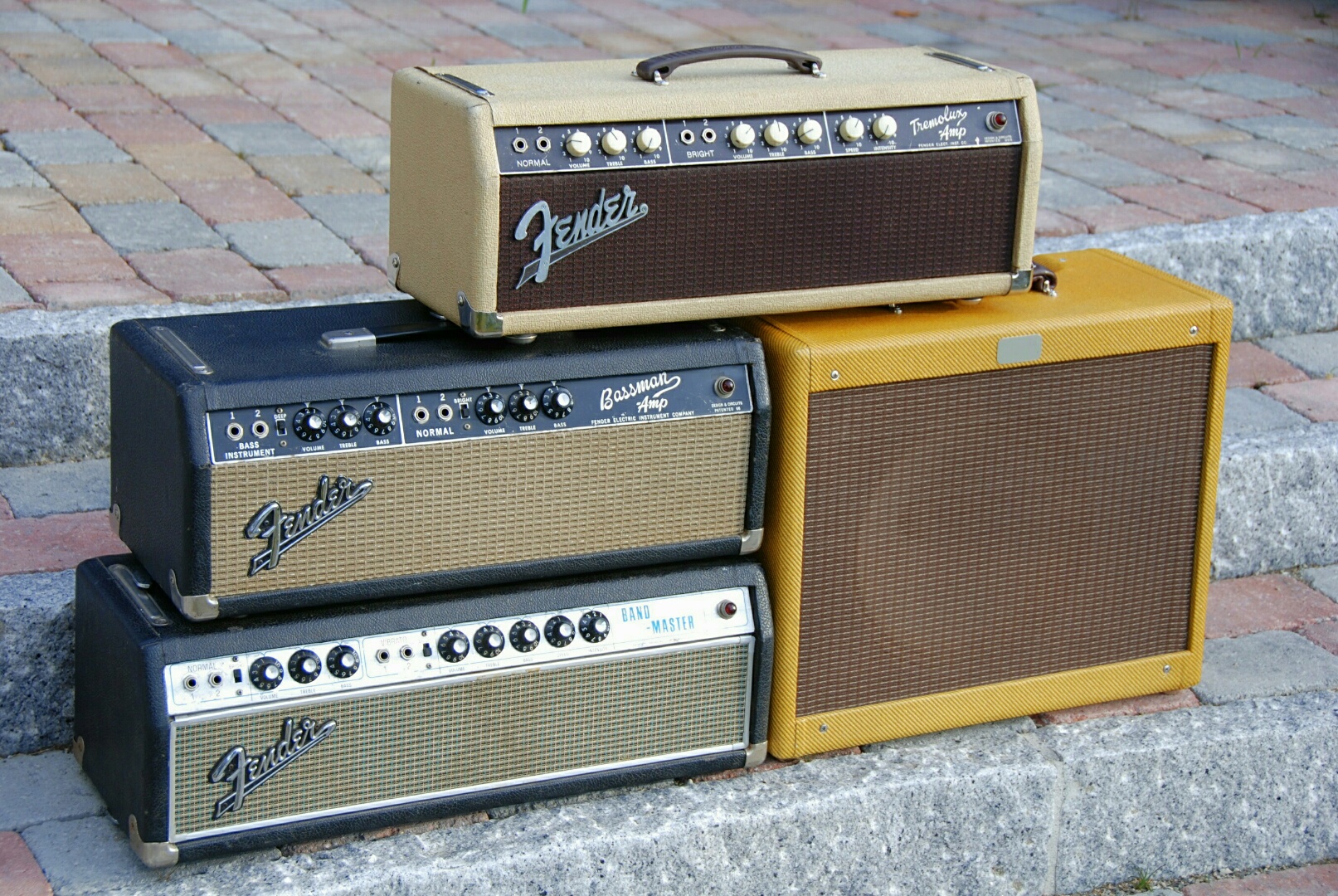
The picture above shows a Tweed Deluxe, a Blonde Tremolux, a Blackface Bassman and a Silverface Bandmaster lined up in a cold spring morning outside our house at the inner fjords of Oslo, Norway. The various Fender amp models have gone through several cosmetic changes since the 40’s when Leo Fender started developing amps for guitars and instruments. Let’s list the vintage Fender eras below.

46-48 Woodie and K&F
48-60 Tweed (wide panel + narrow panel)
60-64 Blonde
59-63 Brownface
64-67 Blackface
67-81 Silverface

These years are not written in stone, and between all eras there were various transition models, some more rare than others, where Fender mixed circuits, tolexes, grill cloths and face plates. Some models skipped a few transitions, such as the Champ that went directly from Tweed to Blackface in 1964. After 1981 came the transistor amps followed by a new series of blackface amps. Then was the Riviera amps and various reissues…. We have to stop here. Many people are defining the post silverface amps as modern amps, and not vintage.

Treble bleed or 50’s wiring

You may have noticed that the tone gets a little darker when you back down the volume on your guitar, especially for stratocasters and telecasters. This is an effect of the original circuitry from Leo Fender. Some like it, some don’t. Those who like it tend to appreciate a mellow rythm playing tone when backing down the volume. On the other hand, there are a few scenarios where you might enjoy having full treble at lower volumes:

– When you play solo and licks with reduced guitar volume and want the same tone as on full volume setting.
– When you actively use your guitar volume knob to go from cranked to clean sound with a tube amp set in its sweet spot.
– When you play at reduced guitar volume with pedals, such as wah wah, fuzz, boost, overdrive/fuzz, and your pedals sound best with the same full and sparkling tone as on maximum volume.

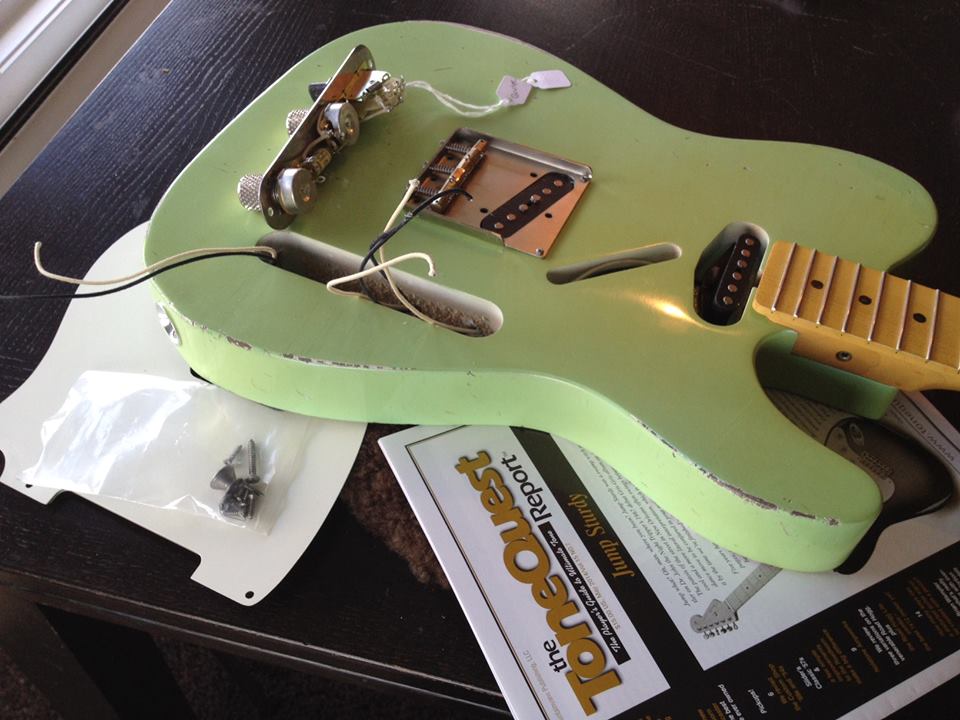
tele

If you recognize any of the scenarios above, you should read further on http://fenderguru.com/how-fender-amps-work/fender-stratocaster-explaind-setup-guide where we recently have explained how you can achieve this with either adding a treble bleed kit or re-wire to the 50’s wiring. These are two popular mods not only for Fender guitars, but all brands and models.

Also, as we go from warm summer to colder temperatures, remember to check your truss rod tension and adjust action accordingly either with saddle height, truss rod tension or pickup height.

Speakers FAQ

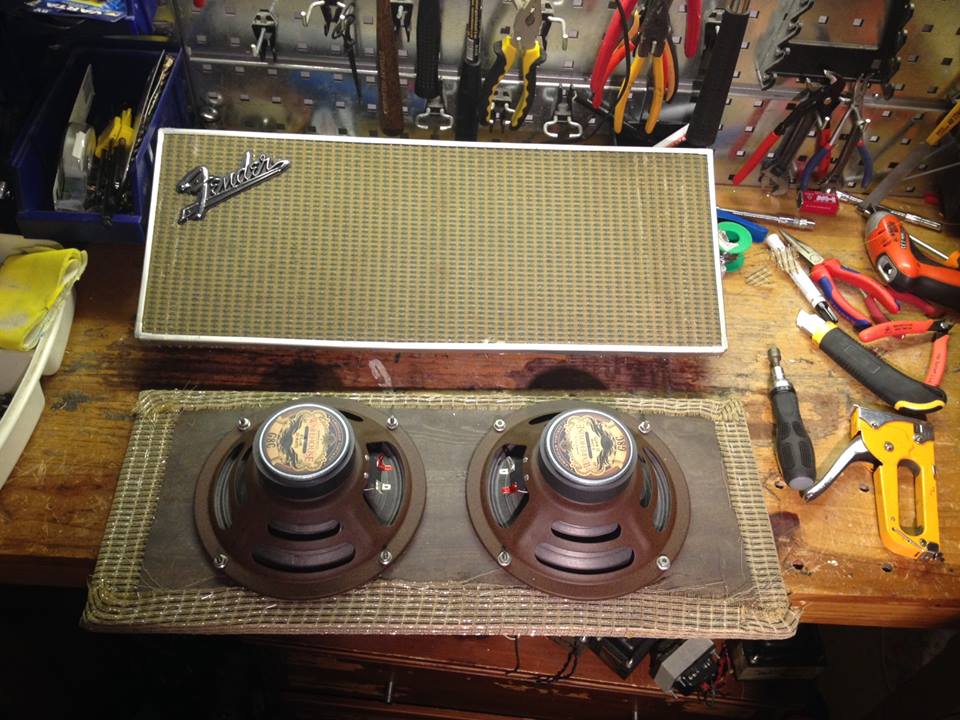
wgs

Q. What characterizes a good speaker in a guitar amp?
A. A good speaker produces a tone that pleases the guitar player.

Q. Brithish or American?
A. The terms were traditionally used for the American Fender + Ampeg amps/speakers and the British Marshall + Vox amps/speakers. American speakers were typically Jensen, CTS, Oxford, JBL + while Celestion was the main British speaker manufacturer. Today these terms are mostly used to describe a bright and full tone speaker (American) or a smooth and mellow sounding speaker (British). In our opinion American speakers are best for cleaner sounds while the smoother British speakers tend to match distorted guitar tones well. This is because the smoother speakers reduce the highest frequencies that are produced in a distorting amp.

Q. What does the power rating mean?
A. It says how much electrical power, P = Current x Voltage, measured in Watts, a speaker can handle before it gets damaged. It can get damaged in several ways; the coil wire burns, the speaker cone is teared up or the spider holding the coil in place is torn up or gets misaligned allowing coil rub into the magnet, among others.

Q. Is a powerful speaker louder than a speaker with less max power rating?
A. No. The power rating does not indicate how loud a speaker is. That’s efficiency or sensitivity, measured in dB / ( 1 Watt x 1 Meter) which tells you how loud your speaker is measured 1 meter away when fed by 1 watt.

Q. Does a high power speaker sound better than low power speakers.
A. No. See first question. It is our personal opinion at fenderguru.com that you should size the speakers “correctly”, matching the amp’s power. The four 10″ speakers in a 40W super reverb will only handle 5-8 watts each during normal playing. There is no point in having 50 or 100 watt speakers in that amp unless you really like the tone in those speakers (other reasons than the power handling). We think it is better to have low power speakers, 20-30 watts, in the Super Reverb so that the speakers are operating in their sweet spot. Some player’s do not prefer the bass notes farting out in the speakers, but others do. How much you push the speakers depends a lot on the tone, attack and playing style. If you play in a smooth finger style you will more likely not need as much firmness in the low end as someone with a firm right hand pick attack.

Q. How do you build a high power speaker?
A. First it is all about the electrical current and the magnetic field that is created. A thick coil wire can handle lots of current from the amp. The larger coil diameter and the more coil windings, the stronger magnetic field will be created. A small gap (in mm) between the magnet and coil wire ensures a high conversion factor between electrical current and magnetic field. Secondly, when you have produced a strong magnetic field you need a strong magnet that can generate a mechanical force/push against the induced magnetic field from the coil. Then you have converted the magnetic field energy to a physical energy (mass and speed of coil+cone+spider). Hence, the coil will start moving and vibrate according to the frequency of the alternating current. An A note at 440Hz will make your speaker coil go in and out 440 times pr second. If the coil is pushed by a strong magnetic field you will need a strong mechanical construction of the spider, speaker cone and coil that is glued together. The spider and speaker cone needs to be firm, tight and thick and must be able to vibrate freely without overriding the physical boundaries at either end of the magnet gap. A large speaker with large pysical dimensions in all ways (coil diameter, vibration range, cone diameter) is able to to push more air. Hence more desibels can be measured over a wide frequency area.

Q. What are the generic tonal differences between 10, 12 and 15″ speakers?
A. As a theoretical exercise let’s compare three single speaker configurations, 1×10″, 1×12″ and 1×15″, mounted in equally sized speakers cabinets. The size of the speaker cabinet plays a significant role and we need to eliminate that factor. And we should compare three speakers that are built on the same design principles, for example Jensen P10q, P12n and P15n. There is no point in throwing in the EVM12L or Eminence Swamp Thang in the comparison against vintage style speakers. First, the bigger speaker diameter the more spread you get, one of the key advantages with larger speakers. The drawback is of course weight, size and the fact that you need more power to run/vibrate the speaker, pushing it into its sweet spot. The bigger speakers can handle more power and more bass since bass frequencies require lots of power handling. However, the 12″ is the overall loudest speaker. It is true that a 15″ speaker can handle more bass and power, but the loudness of a guitar tone lies in the middle and treble frequencies. This is where the 12″ speaker excels with an overall balanced tone. If you have a large 1×12″ cabinet you can actually get more bass from that than from a smaller sized 1×15″ cabinet. On the smaller side, the 1×10″ speakers are faster and quicker in the response. Less current is needed for the speakers to vibrate. You will get improved dynamics and touch sensitivity, which is nice if your music benefits from that. Summarized, there is no speaker size that is superior to the others. But if it was one speaker, one man, one island, we’d go with the 1×12″.

Q. What should one think of when mixing different speakers?
A. Books can be written about this. It’s all about taste and how complicated you want to do things. See the speaker section on our web site http://fenderguru.com. The most important thing is to not mix speakers that are too different in efficiency, brightness and firmness in bottom end. Otherwise you will have a hard time finding a sweet spot on your amp where the volume and EQ settings match all speakers. It also gets more difficult to mic the amp.

Q. Different magnet materials? Ceramic, Alnico, NeoDymium? Should I care?
A. It depends. If weight is an issue and you play powerful amps and speakers, you should consider NeoDymium. Personally we think Alnico is a bit overrated among vintage amp enthusiasts. Some of the best Fender tones we’ve come over is from ceramic speakers, for example blackface Pro Reverb with Jensen C12n. blackface Vibroverb with Jensen C15n, blackface Super Reverb with CTS Ceramic, blackface Princeton Reverb with Jensen C10n. Yes, our Super Reverbs with alnico Jensen P10r are also fantastic, but not necessarily because of the speakers. The frequency response, clarity and brightness of a speaker is determined by many other factors than the magnet, for example the cone material, stiffness, doping etc.

An ES335 and a burning blackface Super Reverb

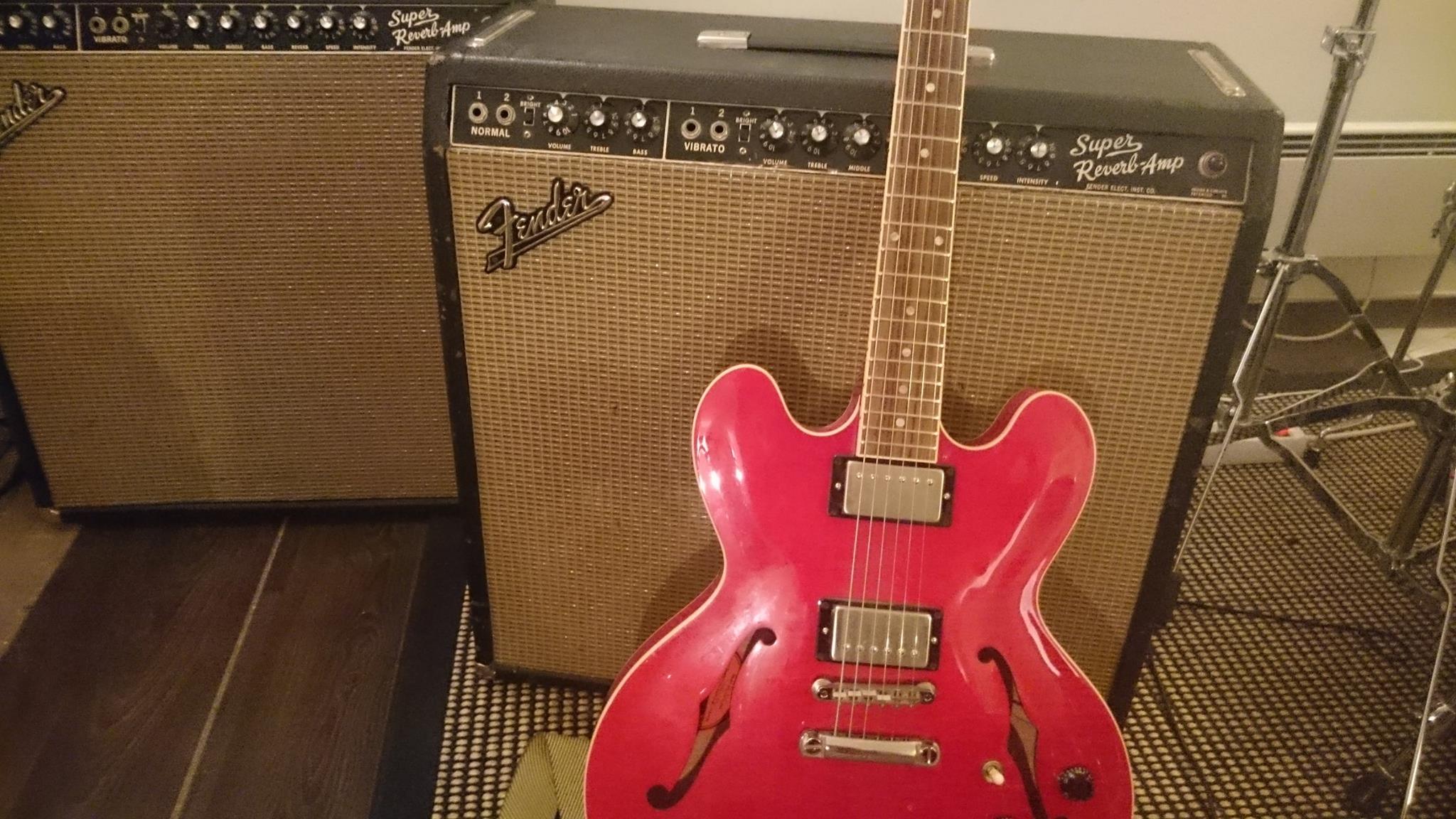
Let’s explore the tone of the legendary blackface Super Reverb with the equally famous ES335 guitar. We’ll explain why this a killer combination and help you rediscover vintage guitar tone once again.

es335

Semi-hollow-body humbucker guitars like the ES335 produce strong lower mids and loose, flabby lows. The signal is hot and strong (in watts) at the input of the amp and will cause breakup much sooner than with weaker single coil guitars. A humbucker is also louder than a single coil at a given volume setting, which is why Leo Fender created two inputs in most of his amps (he also had two channels, smooth and bright, sometimes reverb and non-reverb. Ahh so many options!… ). The high input 1 was meant for single coils and the low input 2 was meant for humbuckers. The low input 2 is dampened 3dB relative to input 1 by the extra 68K voltage divider resistor. The idea was that guitarists may want to swap single coils and humbuckers between songs and not having to adjust the volume on the amp. To this day we’ve never seen anybody use the Fender amps this way. But that’s a different story….

A hot guitar signal will cause more preamp distortion and less clean headroom than with single coils. Once the signal is distorted there is no way back to making it clean again. Many players have done simple amp mods to create more preamp gain like Pull V1, tremolo disconnect and 12ax7 phase inverter. All these are described in details on our web sitehttp://fenderguru.com. These mods should be most valued by single coil players. The default humbucker tone in with a blackface Fender amp is raw enough with just the right amount of hair on it. It is in our opinion an incredible tone that should not be messed up with the use of any pedal effect. All you need is a little touch of natural spring reverb from the amp.

In fact, some ES335 players might experience they have too little clean headroom with smaller amps like the Deluxe and Princeton Reverb. This is why a big 40W amp is a good match. Personally we just love the tone of a humbucker played clean or slightly cranked. Sadly, few players dare to play this clean these days. Those who do are respected greatly for their old school, vintage vibe.

The strong mids and loose, flabby low end of an ES335 will not only cause trouble for the preamp section. The power amp section will also struggle in delivering enough current through filter the caps, tube rectifier and the power transformer. The amp will kneel in all possible manners when set beyond its sweet spot, resulting in a dirty sound, particularly in the low end. If you completly turn down the treble with the tone knob on your guitar you’ll hear clearly the farty lows. The amp simply cannot deliver a clean firm bass tone with enough attack. With low power, vintage style speakers you may also experience speaker breakup, resulting in an even more complex and totally broken tone. Listen to i.e. Elmore James’ “Dust my broom” and you’ll get the idea of speaker breakup. If you have vintage speakers with original paper cones you must be really careful with the bass and mid settings on your amp when playing an ES335. The speakers can easily be shot down in flames by an ES335 and a burning blackface Fender amp. A good thing with the Super Reverb is that the four ten inch speakers will divide the power equally and they are less likely to blow, onother reason why the Super Reverb pairs well with humbuckers. If you have moderns speakers with 30-50w each, you’ll have no trouble handling a dirty sound.

IMG_1766

To balance a mellow ES335 tone you need sparkle. The Super Reverb has more than enough sparkle with its four tens. The bright sounding ab763 circuity with bright switch on both channels will allow the highest frequencies to pass through.

Check out Mike Andersen playing the blues to hear the tone we’re talking about:
https://www.youtube.com/watch?v=Qytbn3uZsTY
https://www.youtube.com/watch?v=ihNnTR74beU

Our own 2005 ES335 has been upgraded with a ’59 pickup set from Cream T Pickups, made in the woods of Norway.http://www.creamtpickups.com/ They were cleaner and not as muddy as the original humbuckers.

Deluxe Reverb race tune-up

We get a lot of questions about modding the Fender Deluxe Reverb to become a bigger amp with more power and clean headroom. It is a very popular amp and flexible since it can take both 6L6 and 6V6 power tubes. With 6L6 you’ll get 30+ watts compared to the original 22 watts. This mod is so simple it’s hardly called a mod. There are a few risks with this mod, though. The 6L6 will draw more filament current from the PT, which you could compensate for by pulling V1 and the V5 tremolo tube, if you’re not using tremolo. Also, you should use GZ34 as rectifier tube since it draws less current from the PT than a 5U4GB. Still you should check the temperature of the power transformer from time to time. Playing it for 5 hours will involve some risks. Now we’ve said that.

You won’t get full 40 watts and a big Vibroverb/Super Reverb/Pro Reverb tone from a Deluxe Reverb unless you install a bigger power transformer. To minimize sag and increase the bass tone, you should also have a bigger output transformer. There are also other things one should or could do with the filter caps and voltage divider resistors. Let’s take a closer look.

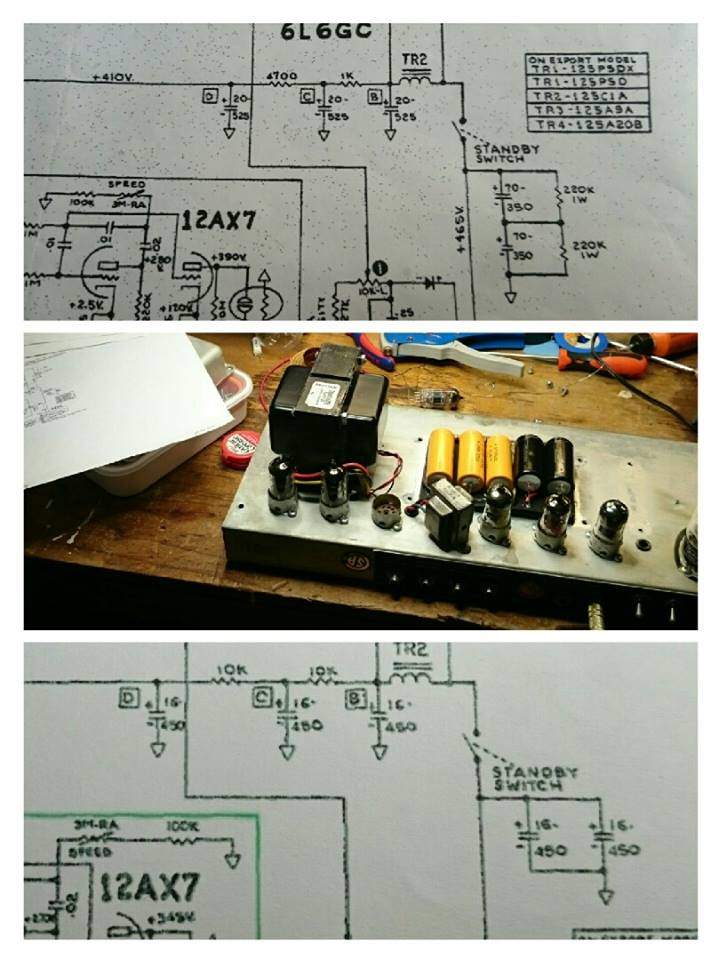
The bottom picture on the collage below shows the two 16µF filter caps of the deluxe reverb mounted in parallell, resulting in a 32µF capacitance. The super reverb has two 80µF capacitors in series, resulting in a 40µF total capacitance. Yes we know that capacitors in series and parallel is difficult to understand. Actually, it is simple. It works just the opposite way of resistors. An amp tech will also notice the lack of resistors in parallel with the filter caps in the deluxe reverb. This is why the Deluxe Reverb can be dangerous on the repair bench since the caps can hold 3-400 VDC over a longer period of time. In the Super Reverb those 220K resistors will make sure the caps are discharged in matter of seconds.

deluxe tuneup

The point is. In the deluxe reverb you may simply replace the 16µF caps with 20 µF caps, OR you may switch to the safer Super Reverb reverb design with two 80µF caps in series + resistors. You should also replace the voltage divider caps with 20µF caps to get more ompfh there. And you should replace the two 10K voltage divider resistors with 1K and 4.7K, just like the super reverb. This will increase the power handling in the preamp section, simply explained.

fenderguru.com road amps

We proudly present our road amps for 2015, available for hire in the Nordic countries. These amps are set up to operate under rough conditions and can play really loud if they have to. Most importantly with vintage gig amps is reliability. You do not want the fuse, tubes, speakers, reverb tank + cables and pots to fail, scratch or make unwanted noise. All amps have 6L6 bias set to a safe 33mA and with 12au7 reverb driver tubes for better reverb control. The speakers are modern, heavy duty speakers with military specs with vintage correct Fender tone (almost 🙂 ). All have working tremolo and reverb with footswitch, though very few use it. All amps are played weekly for longer periods of time to allow bugs and errors to be discovered and repaired, either tubes, caps or pots. The amps have solid baffles and tight cabinets with no loose screws or rattling parts.

road amps

From right to left:

– Our “Linda Ronstadt Deluxe Reverb”, a 71 silverface Deluxe Reverb that has been blackfaced in cosmetics and circuitry. It has 6L6 power tubes, upgrade transformers, diode rectifier and a mean 60s EVM12L speaker. It has a switchable negative feedback loop (see fenderguru.com/amps/bassman how it works) for a slight volume and treble boost. We recommend everyone to try the EVM12L in a Deluxe Reverb, either reissue or vintage amp. It has a liquid clear Dumble’ish clean tone to die for.

– A blackfaced 71 Vibrolux Reverb with a custom 10″ + 12″ baffle. It’s loaded with an ass-whopping Celestion Alnico Gold 12″ and light weight yet powerful and efficient Jensen Jet Series Tornado 10″. The speakers are loud, punchy and sparkling. Typically blackface, just more. The amp also has the negative feedback foot switch.

– A 66 Pro Reverb 2×12″, original except for the WGS speakers. The British voiced speakers will handle most pedals well since they smooth out the brightest treble frequencies.

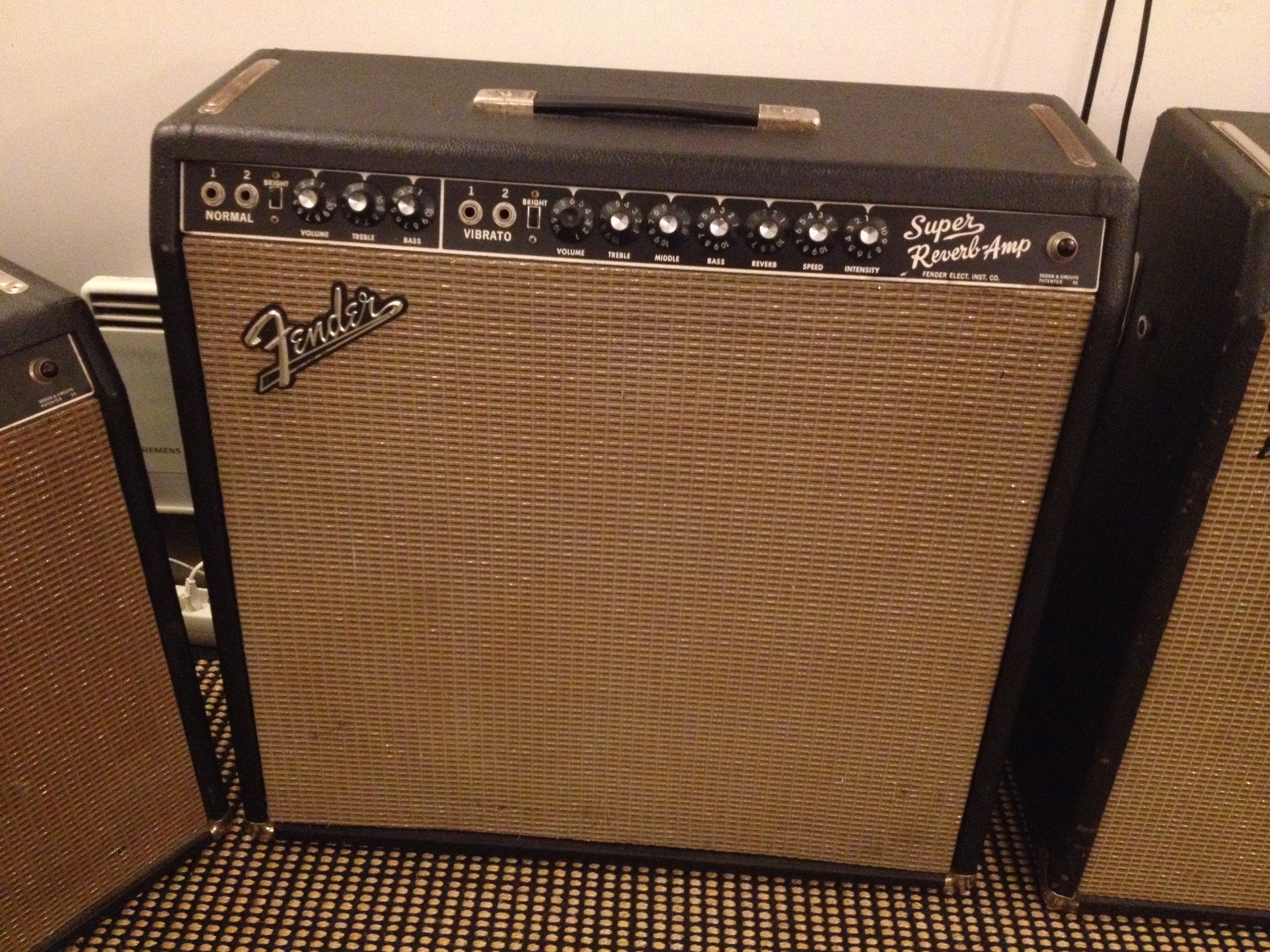
– A 66 Super Reverb 4×10″, also original except for the 2x Jensen Jet Series Tornado 10″ and 2x Weber 10A125, both American voiced speakers. This amp is meant to be played on large stages and is bright and powerful.